
By Nicole Rivard. Photography BY ©Joel Sartore/Photo Ark
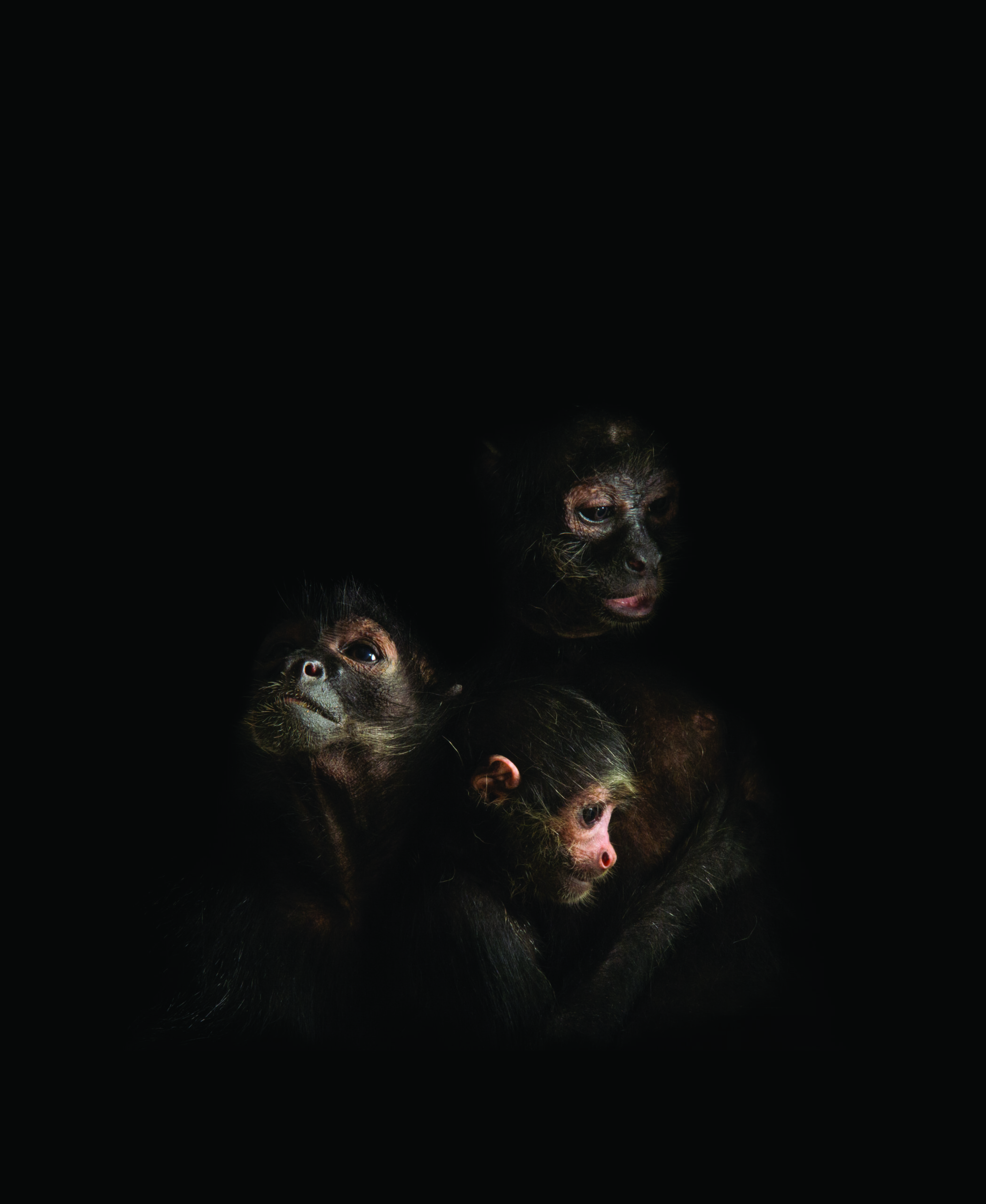
On the morning of Aug. 14, 2023, a U.S. Customs and Border Protection officer at the Calexico, Calif., port of entry discovered an animal carrier that contained three baby spider monkeys hidden behind the rear seat of a van.
The driver and passenger of the van, a 29-year-old female and a 31-year-old male, were applying for entry from Mexico.
A search through their phones led to evidence that they were smuggling the monkeys for 33-year-old Sarmad Ghaled Dafar of Houston, Texas. Additional evidence revealed that Dafar had previously arranged to have at least three other baby Mexican spider monkeys smuggled into the U.S. from Mexico in June 2022 and July 2023, according to the U.S. Attorney’s office for the Southern District of California.
In April 2025, Dafar was sentenced to four months in custody and 180 days home confinement. He was also ordered to pay approximately $23,000 for the cost of quarantining three of the monkeys at the San Diego Zoo.
It may look like justice was served, however his sentencing cannot undo the damage that has been done to those wild spider monkey families. The three spider monkeys and their families, and other spider monkeys who have been smuggled out of their homes, have been decimated by the illegal pet trade.
In August, Primarily Primates rescued two one-year-old male spider monkeys who were also confiscated in California. In June, PPI had rescued Felix, a baby spider monkey found running loose through a San Antonio, Texas neighborhood, where it’s illegal to have spider monkeys as pets.
We learned from a U.S. Fish and Wildlife (FWS) officer that about 90% of spider monkeys confiscated in Texas did not come from USDA-regulated primate breeding facilities; they were caught in the wild and smuggled over the border. That means Felix was likely living happily in the wild somewhere until a poacher came in and killed his entire troop to steal him.
According to testimony from FWS agents in the Dafar case, Mexican spider monkey mothers will not voluntarily relinquish their babies, and the entire troop of spider monkeys will try to defend the mother and baby from perceived threats. Consequently, to capture baby Mexican spider monkeys, poachers will typically have to kill or incapacitate the mother and troop to capture the baby.
In the case of the three baby Mexican spider monkeys that were interdicted in 2023, the San Diego Zoo performed genetic tests and determined that the three babies each had different mothers.
A WORSENING BATTLE
From 2015–2019, the U.S. Fish and Wildlife Service handled 834 cases of live wildlife that were refused clearance and seized or abandoned—about 14 new cases per month and 27 live animals a day—which included 48,793 individual animals who required care and placement.
And wildlife trafficking is just as prevalent today, if not worse, as it was six years ago, according to the FWS’ Office of Public Affairs.
Why? Monetary incentives, in conjunction with the traditionally lower punitive outcomes for violators compared to other types of major crime, as well as the ease and anonymity online marketplaces provide, are all contributing factors.
In addition to non-human primates, pangolins (scales), sharks (fins), reptiles (turtles, tortoises, snakes, lizards), birds (parrots, canaries), elephants (tusks), rhinos (horns), and big cats (lions, tigers, jaguars, etc. for the illegal pet trade, as well as body parts to create traditional medicines, fashion items, and other products) are some examples of highly trafficked wildlife.
Spider monkeys in particular are currently being trafficked at a higher rate than has been previously experienced due to social media content creators and influencers posting pictures and videos featuring them to gain views and followers.
Such content gives the perception that it’s socially acceptable and desirable to have lemurs, monkeys and chimpanzees as pets.
That’s why FWS officials say educating the public on the gravity of the illicit primate trade is more important than ever.
In addition to spider monkeys being taken from their mother’s arms in most circumstances—they face horrendous conditions when abducted, including being drugged and concealed in compartments or trunks of vehicles without adequate food and water. While FWS does not keep statistics on mortality rates, officials believe they are most likely high due to these conditions.
The trade also endangers humans and other animals, as non-human primates carry zoonotic diseases including hepatitis and tuberculosis. In some cases, individuals
smuggling monkeys through from Mexico into the U.S. are being financed by drug cartels.
Whether someone has ties to a drug cartel or is just operating out of their own greed—like 21-year-old Savannah Nicole Valdez from Houston—it sickens us.
During summer 2023, law enforcement discovered several advertisements posted to Craigslist offering exotic birds for sale, including keel-billed toucans and yellow-headed amazon parrots, which are protected under the Endangered Species Act. A subsequent undercover investigation involved the sale of two keel-billed toucans for $3,000 and a Mexican spider monkey for $8,500. Valdez pleaded guilty Feb. 8, 2023.
“When Savannah Valdez sold a Mexican spider monkey, she contributed to endangering a species,” U.S. Attorney Alamdar S. Hamdani said in a statement. “As the court heard today, those who traffic in infant spider monkeys shoot the mothers first and then pull the infants from their mother’s dead bodies before throwing them into cages for transport. Valdez’s actions helped sustain an illicit market that encouraged the needless death and suffering of endangered animals. Thankfully, now she will have to spend time in a cage of her making—a prison cell.”
PPI JOINS NATIONWIDE EFFORT TO COMBAT WILDLIFE TRAFFICKING
Wildlife trafficking is a conservation crisis, with countless animals—including primates—being pushed toward extinction from the illegal trade in live animals as well as products made from their body parts.
Primarily Primates is proud to be part of the solution—while we’ve been rescuing primates from the illegal pet trade, biomedical research and entertainment for decades, we were recently chosen to be part of the Wildlife Confiscations Network.
The network is a first-of-its-kind pilot program that strives to reduce wildlife trafficking. It provides a coordinated system to ensure the care and sanctuary for animals confiscated by law enforcement.
“Thanks to social media, people seem to think monkeys make good pets. What happened to Felix and his family is a supreme injustice,” said Krystal Mathis, executive director of Primarily Primates. “We are happy to be involved in righting the wrong. We can provide baby Felix a place to live where he can experience life with others of his own kind and be respected for the individual he is. Sadly, there are many smuggled ‘border babies’ like Felix in the U.S. right now who can never go back to the wild.”
Mathis said the Wildlife Confiscations Network helped PPI find age-appropriate spider monkey companionship for Felix.
“Thanks to the work of many individuals and government agencies dedicated to ending wildlife trafficking, there is hope and a better future for these beautiful monkeys after their traumatic beginning,” she said.
Wildlife trafficking is one of the largest illegal trades, estimated to be worth between $7-23 billion per year. Often the same criminals that engage in wildlife trafficking also engage in drug and human trafficking as well as weapons smuggling.
As FWS continues to battle the illegal primate trade, PPI’s participation in the Wildlife Confiscations Network will be crucial for the care and well-being of the confiscated babies.